


Personal Gas Detector FAQs
Personal Gas Detector FAQs: Everything You Need to Know
If you rely on a personal gas detector to protect yourself in hazardous environments, ensuring it is properly maintained is just as important as wearing it. A gas detector that has not been tested or calibrated may fail to warn you of dangerous gas concentrations, putting lives at risk.
At Q Instrument Services, we are frequently asked about the correct maintenance procedures for portable gas detectors. Below we’ve answered some of the most common questions.
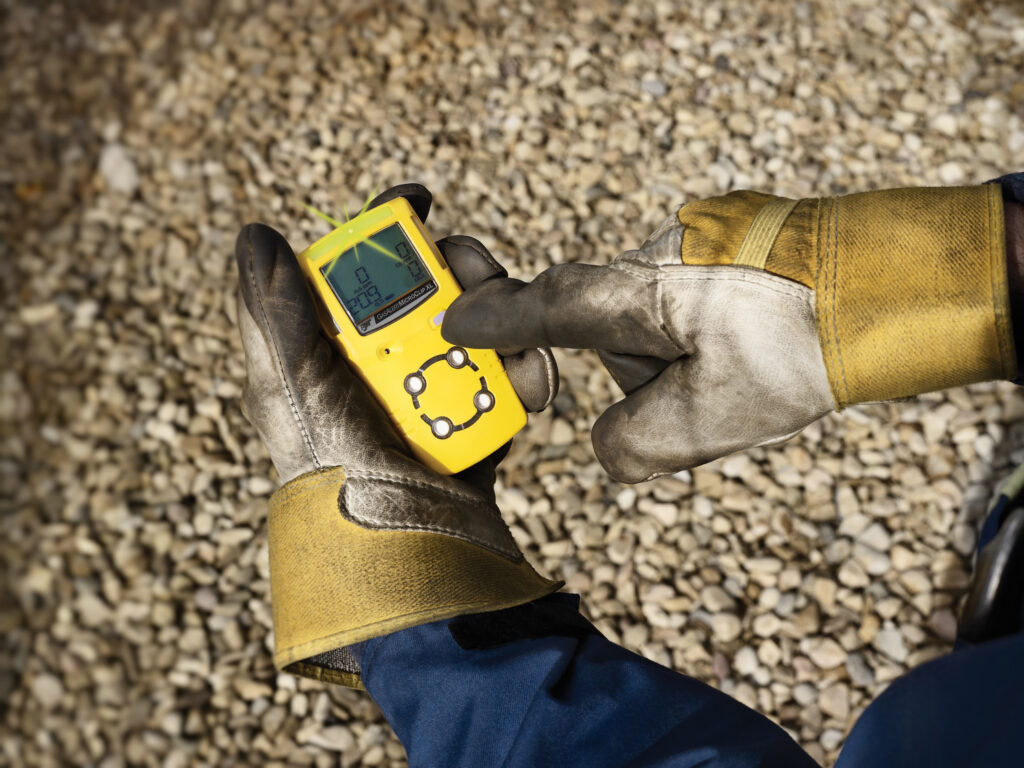
How Often Should I Bump Test My Gas Detector?
A bump test should be carried out before each day’s use, or before each work shift.
A bump test is a simple functional check that briefly exposes the detector to a known concentration of calibration gas to verify that:
- The sensors respond correctly.
- The audible, visual and vibrating alarms activate.
- The instrument reacts within an acceptable time.
A bump test does not adjust or calibrate the instrument—it simply confirms that everything is working as expected.
If your detector fails a bump test, it should be removed from service immediately and calibrated. If it continues to fail after calibration, it should be inspected by a qualified service technician.
How Often Should I Calibrate My Gas Detector?
Most gas detector manufacturers, including Honeywell BW, recommend a full calibration every six months.
Calibration adjusts the detector’s sensors to ensure they accurately measure gas concentrations. Over time, sensors naturally drift due to ageing, environmental conditions and normal use.
However, calibration should also be performed:
- After the detector fails a bump test.
- After replacing a sensor.
- After exposure to unusually high gas concentrations.
- If the detector has experienced physical damage.
- Whenever required by your company’s safety procedures.
Many industries choose to calibrate more frequently depending on their risk assessment.
What Is the Difference Between a Bump Test and a Calibration?
This is one of the most common questions we receive.
Bump Test
A quick functional check that confirms:
- Sensors respond.
- Alarms operate correctly.
- Gas reaches the sensors.
A bump test takes less than a minute and makes no adjustments to the detector.
Calibration
A calibration is a more detailed procedure that:
- Uses certified calibration gas.
- Adjusts sensor readings to match known gas concentrations.
- Restores measurement accuracy.
Calibration typically takes several minutes and should only be performed using the correct gas mixtures and approved procedures.
Can I Skip Bump Testing If My Detector Was Recently Calibrated?
No.
Calibration confirms the detector was accurate at the time it was calibrated.
A bump test confirms it is still functioning correctly today.
Sensors can become blocked, poisoned or damaged after calibration. Pumps, filters and alarm systems can also develop faults.
For this reason, manufacturers recommend regular bump testing regardless of calibration date.
How Long Do Gas Detector Sensors Last?
Sensor life depends on the sensor type and operating conditions.
Typical lifespans are:
- Oxygen (O₂): 2–5 years
- Carbon Monoxide (CO): 2–5 years
- Hydrogen Sulphide (H₂S): 2–5 years
- Catalytic LEL sensors: 3–5 years
- PID sensors: Variable depending on lamp maintenance and exposure
Heavy use, harsh environments and exposure to high gas concentrations can shorten sensor life.
What Happens If I Never Calibrate My Detector?
An uncalibrated detector may:
- Under-read dangerous gas concentrations.
- Over-read safe conditions.
- Fail to alarm correctly.
- Drift outside manufacturer specifications.
- Leave your workforce inadequately protected.
Routine calibration is a small investment compared with the potential consequences of an inaccurate gas detector.
How Should I Store My Gas Detector?
To maximise the life of your detector:
- Store it in a clean, dry location.
- Avoid excessive heat or freezing temperatures.
- Keep it away from corrosive chemicals and solvents.
- Charge rechargeable batteries regularly.
- Perform a bump test before returning it to service after long periods of storage.
Do Gas Detectors Expire?
The instrument itself usually does not “expire”, but its sensors do.
Many detectors remain in service for many years provided worn sensors and batteries are replaced when required.
Some single-gas disposable detectors, however, are designed with a fixed operating life (for example, two or three years) and cannot be serviced once they reach end of life.
Why Do Most Multi-Gas Detectors Measure Oxygen, Carbon Monoxide, Hydrogen Sulphide and Flammable Gases?
If you’ve ever used a portable multi-gas detector, you’ve probably noticed that the vast majority are configured to monitor the same four hazards:
- Oxygen (O₂)
- Carbon Monoxide (CO)
- Hydrogen Sulphide (H₂S)
- Flammable gases (LEL)
These four sensors have become the industry standard because together they protect workers against the most common atmospheric hazards encountered in confined spaces, industrial plants, wastewater treatment facilities, pharmaceutical manufacturing, food processing, utilities and many other workplaces.
Oxygen (O₂)
Unlike the other sensors, the oxygen sensor isn’t looking for a toxic gas—it’s monitoring whether there is enough oxygen in the atmosphere to support life.
Normal air contains approximately 20.9% oxygen. If oxygen levels fall below safe limits due to displacement by gases such as nitrogen, carbon dioxide or argon, workers can quickly become dizzy, lose consciousness or even suffocate.
The oxygen sensor also warns of oxygen-enriched atmospheres, which can dramatically increase the risk of fire.
Carbon Monoxide (CO)
Carbon monoxide is often called the “silent killer” because it is colourless, odourless and highly toxic.
It is produced by incomplete combustion from sources such as diesel engines, gas boilers, generators and forklifts. Even relatively low concentrations can cause headaches, dizziness and fatigue, while higher concentrations can become life-threatening within minutes.
Hydrogen Sulphide (H₂S)
Hydrogen sulphide is another highly toxic gas commonly found in:
- Wastewater treatment plants
- Sewage systems
- Biogas facilities
- Oil and gas installations
- Confined spaces containing decaying organic matter
Although H₂S has a characteristic “rotten egg” smell, it rapidly deadens your sense of smell at dangerous concentrations. This means you should never rely on your nose to detect its presence.
Flammable Gas (LEL)
Rather than measuring one specific gas, the flammable sensor monitors the concentration of combustible gases and vapours as a percentage of their Lower Explosive Limit (LEL).
Common flammable gases include methane, propane, butane and hydrogen. By warning users before explosive concentrations are reached, the detector helps prevent fires and explosions.
Together, They Cover the Most Common Atmospheric Hazards
By monitoring oxygen, carbon monoxide, hydrogen sulphide and flammable gases simultaneously, a four-gas detector provides protection against the four major atmospheric dangers:
- Oxygen deficiency or enrichment
- Toxic gas exposure
- Fire and explosion hazards
- Hazardous atmospheres commonly encountered in confined spaces
While some applications require additional sensors—such as chlorine, ammonia, sulphur dioxide, volatile organic compounds (VOCs) or carbon dioxide—for many industries, a standard four-gas detector provides an excellent balance of protection, portability and cost-effectiveness.
Why Choose Q Instrument Services?
Q Instrument Services has been helping Irish businesses maintain portable gas detectors for over 25 years.
We provide:
- Portable gas detector calibration
- Bump testing
- Sensor replacement
- Repairs
- Calibration gas and accessories
- Honeywell BW specialists
- Fast turnaround throughout Ireland
Whether you use a single personal gas detector or manage hundreds of instruments across multiple sites, we can help keep your equipment compliant, accurate and ready for use.
Need Advice?
If you’re unsure whether your gas detector is due for calibration, needs servicing or has failed a bump test, our experienced team is happy to help.
Contact Q Instrument Services today for expert advice on portable gas detector servicing, calibration and maintenance throughout Ireland.
